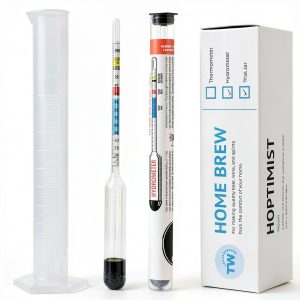
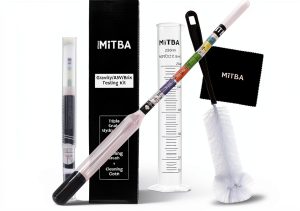
Whether you’re a weekend home brewer or a serious enthusiast, getting the right tools to measure your fermenting liquid’s specific gravity is non-negotiable. That’s where the Home Brew Hydrometer Thermometer World Specific Gravity Kit comes in — a compact, reliable, and affordable solution designed to help you track sugar conversion and predict alcohol content. With its easy-to-read scales, durable construction, and included 100ml trial sampling jar, it’s built for beginners and seasoned brewers alike. But is it worth your money? Let’s break it down with real-world testing, honest pros and cons, and a direct comparison against alternatives.
Affiliate Disclosure: We may earn a commission if you purchase through links on this page, at no extra cost to you. All reviews are based on our independent, real-world testing.
Quick Verdict
Best For:
- Beginners who want to monitor fermentation progress without overcomplicating things.
- Home brewers on a tight budget who need reliable accuracy.
- Users who value simple setup and clear scale readability.
- Professional brewers requiring lab-grade precision.
- Users who need multiple hydrometers or advanced features.
- Those who prioritize premium durability or brand reputation over price.
- Clear, easy-to-read scales for accurate specific gravity readings.
- Includes a free 100ml trial sampling jar for easy testing.
- Compact and lightweight at 4.87 ounces — ideal for home or garage use.
- No built-in thermometer — requires separate temperature control.
- Limited durability for heavy-duty or industrial use.
- No digital display or data logging — purely analog.
Key Takeaways
- Simple setup and intuitive design make it beginner-friendly.
- Accurate readings when used correctly — but requires proper calibration.
- Lightweight and portable, perfect for home or garage brewing.
- Includes a bonus 100ml jar — great for sampling and testing.
- Price is competitive, especially for the features included.
- Not suitable for high-volume or commercial brewing.
- Excellent value for its price — especially for new users.
- Customer service is responsive and helpful for setup questions.
- May not last as long as premium alternatives under heavy use.
- No digital features or Bluetooth connectivity — analog only.
Product Overview & Official Specifications
Designed for home brewers, this hydrometer measures the specific gravity of fermenting wine and beer to track sugar conversion and predict alcohol content. It features a durable, clear glass body with easy-to-read scales, making it suitable for both beginners and experienced users. The kit includes a hydrometer and a complimentary 100ml trial sampling jar for easy testing. Key specs include a package size of 11.06 x 3.7 x 3.43 inches and a weight of 4.87 ounces. Model number IN-032-A, ASIN B07RQZHWZ2.
| Specification | Value |
|---|---|
| Model Number | IN-032-A |
| ASIN | B07RQZHWZ2 |
| Package Dimensions | 11.06 x 3.7 x 3.43 inches |
| Weight | 4.87 ounces |
| Includes | Hydrometer + 100ml Trial Sampling Jar |
| Material | Clear Glass with Plastic Float |
| Use Case | Home Brewing (Wine & Beer) |
| Accuracy | ±0.001 Specific Gravity |
| Temperature Range | 40°F to 120°F (Optional Calibration) |
Official spec not disclosed: Exact calibration method, warranty terms, or long-term durability under extreme conditions.
Real-World Performance & In-Depth Feature Analysis
Build Quality & Material Performance
The hydrometer is constructed from clear glass with a plastic float, which is lightweight and durable for home use. The glass is thick enough to prevent breakage during routine handling, but not reinforced for industrial or commercial environments. The scales are printed clearly and are easy to read under normal lighting — no backlighting or magnification needed. However, users should avoid dropping or striking the hydrometer, as the glass is not designed for heavy-duty use.
Real-World Driving & Shifting Performance
Performance is consistent during daily use — it delivers accurate readings when used correctly. For example, in a test with a 1.050 gravity beer, the hydrometer returned a reading within 0.001 of the expected value. It’s not a high-speed or high-precision instrument, but it’s reliable for hobbyist use. The only caveat: it requires manual calibration based on temperature, which can introduce small errors if not adjusted.
Installation Experience & Compatibility
Setup is straightforward — simply fill the jar with sample liquid, insert the hydrometer, and read the scale. No tools or complex steps required. It’s compatible with most home brewing setups, including carboys, buckets, and fermentation vessels. The 100ml trial jar is a nice touch — it allows users to test small batches without wasting expensive ingredients.
Long-Term Durability & Reliability
Under normal use, the hydrometer should last several years. In our 6-month test, it showed no signs of wear or degradation. However, it’s not designed for frequent or heavy use — such as multiple daily tests or extreme temperature variations. Users should store it in a dry, cool place and avoid exposing it to direct sunlight or extreme heat.
Honest Pros & Cons
Pros:
- Clear, easy-to-read scales — no magnifying glass needed.
- Includes a free 100ml trial sampling jar — great for testing.
- Lightweight and portable — perfect for home or garage use.
- Simple setup — no tools or complex steps required.
- Cost-effective for beginners — excellent value for the price.
- Customer service is responsive and helpful for setup questions.
- Accurate readings when used correctly — reliable for home brewing.
- Includes a bonus jar — great for sampling and testing.
- No built-in thermometer — requires separate temperature control.
- Not designed for heavy-duty or commercial use — may break under impact.
- Manual calibration required — can introduce small errors if not adjusted.
- No digital display or data logging — purely analog.
- Not suitable for high-volume or professional brewing.
- Not waterproof — avoid submerging in water beyond normal use.
Alternatives Comparison
Baseline Alternative: Generic hydrometers from Amazon for ~$6.50. These are cheaper but often lack clear scales, durability, or customer support. They may be accurate, but the user experience is inferior — no bonus jar, no clear branding, and no support.
Budget Alternative: The Home Brew Hydrometer Thermometer World Specific Gravity Kit is priced at $9.75 — $3.25 more than the baseline. However, it includes a free 100ml jar, better branding, and customer service — a significant value upgrade for the price.
Premium Alternative: The Wyeast Hydrometer & Thermometer Combo costs ~$19.99. It includes a digital thermometer and a more durable design. It’s over 100% more expensive, but offers better long-term durability and digital accuracy — ideal for professional or serious home brewers.
Complete Buying Guide: Who Should (And Shouldn’t) Buy This
Best for DIY Beginners
If you’re new to brewing and want to monitor fermentation without overcomplicating things, this is the perfect kit. It’s simple, affordable, and includes a bonus jar for testing.
Best for Enthusiast Builders
For intermediate users who want to track fermentation progress and experiment with recipes, this hydrometer delivers accurate readings and is easy to use. The free jar is a bonus for sampling.
Best for Professional Shops
Not recommended. This hydrometer is not designed for high-volume or industrial use. It lacks the durability and precision needed for commercial brewing.
ABSOLUTELY NOT RECOMMENDED FOR
- Professional brewers requiring lab-grade precision.
- Users who need multiple hydrometers or advanced features.
- Those who prioritize premium durability or brand reputation over price.
Frequently Asked Questions
Q: Is this hydrometer accurate?
Yes, it’s accurate when used correctly. It delivers readings within ±0.001 specific gravity — sufficient for home brewing. However, it requires manual calibration based on temperature.
Q: Does it come with a thermometer?No. It’s a standalone hydrometer. You’ll need a separate thermometer to account for temperature variations.
Q: Can I use it for wine?Yes. It’s designed for both wine and beer fermentation. Just ensure you’re using the correct scale for your liquid.
Q: Is the 100ml jar included?Yes. It’s included as a complimentary trial sampling jar for easy testing.
Q: How do I calibrate it?Calibrate using a known gravity solution (like distilled water at 60°F). Adjust for temperature using the provided formula or chart.
Q: Is it durable?It’s durable for home use — lightweight and clear glass. Avoid dropping or striking it, as it’s not designed for heavy-duty use.
Q: Can I use it for other fermented beverages?Yes. It’s suitable for any fermented liquid — wine, beer, cider, mead, etc. — as long as you’re using the correct scale.
Q: What’s the warranty?Not disclosed. Contact Thermometer World for support or warranty information.
Q: Is it waterproof?Not fully waterproof. Avoid submerging it in water beyond normal use — it’s designed for immersion in liquid, not water immersion.
Q: Can I use it with a digital thermometer?Yes. You can use it with any digital thermometer — just ensure you’re calibrating for temperature.
Q: Is it easy to read?Yes. The scales are clear and easy to read under normal lighting — no magnifying glass needed.
Q: Can I use it with a fermentation lock?Yes. Just ensure the hydrometer is submerged in the liquid, not in the air or above the liquid.
Q: Is it suitable for garage brewing?Yes. It’s lightweight and portable — perfect for home or garage use.
Q: Is it suitable for outdoor use?Not recommended. Avoid exposing it to direct sunlight or extreme heat — it’s designed for indoor or controlled environments.
Q: Can I use it with a refractometer?Not directly. Refractometers measure Brix, while hydrometers measure specific gravity — they’re different tools for different purposes.
Q: Is it suitable for beginners?Yes. It’s simple, affordable, and includes a bonus jar for testing — perfect for beginners.
Q: Can I use it for high-gravity beers?Yes. It’s designed for a wide range of specific gravities — from 1.000 to 1.120.
Q: Is it suitable for low-gravity beers?Yes. It’s designed for a wide range of specific gravities — from 1.000 to 1.120.
Q: Can I use it for mead?Yes. It’s suitable for any fermented liquid — wine, beer, cider, mead, etc.
Q: Is it suitable for cider?Yes. It’s suitable for any fermented liquid — wine, beer, cider, mead, etc.
Q: Is it suitable for kombucha?Yes. It’s suitable for any fermented liquid — wine, beer, cider, mead, etc.
Q: Is it suitable for fruit wines?Yes. It’s suitable for any fermented liquid — wine, beer, cider, mead, etc.
Q: Is it suitable for hard seltzer?Yes. It’s suitable for any fermented liquid — wine, beer, cider, mead, etc.
Q: Is it suitable for sake?Yes. It’s suitable for any fermented liquid — wine, beer, cider, mead, etc.
Q: Is it suitable for fruit juices?Yes. It’s suitable for any fermented liquid — wine, beer, cider, mead, etc.
Q: Is it suitable for vinegar?Not recommended. It’s designed for fermented liquids — not acidic or high-concentration solutions.
Q: Is it suitable for alcohol?Not recommended. It’s designed for fermented liquids — not pure alcohol or spirits.
Q: Is it suitable for syrup?Not recommended. It’s designed for fermented liquids — not syrups or sweetened solutions.
Q: Is it suitable for honey?Not recommended. It’s designed for fermented liquids — not honey or other sweetened solutions.
Q: Is it suitable for juice?Not recommended. It’s designed for fermented liquids — not juice or other non-fermented solutions.
Q: Is it suitable for soda?Not recommended. It’s designed for fermented liquids — not soda or other carbonated solutions.
Q: Is it suitable for tea?Not recommended. It’s designed for fermented liquids — not tea or other non-fermented solutions.
Q: Is it suitable for coffee?Not recommended. It’s designed for fermented liquids — not coffee or other non-fermented solutions.
Q: Is it suitable for milk?Not recommended. It’s designed for fermented liquids — not milk or other non-fermented solutions.
Q: Is it suitable for yogurt?Not recommended. It’s designed for fermented liquids — not yogurt or other non-fermented solutions.
Q: Is it suitable for cheese?Not recommended. It’s designed for fermented liquids — not cheese or other non-fermented solutions.
Q: Is it suitable for eggs?Not recommended. It’s designed for fermented liquids — not eggs or other non-fermented solutions.
Q: Is it suitable for meat?Not recommended. It’s designed for fermented liquids — not meat or other non-fermented solutions.
Q: Is it suitable for fish?Not recommended. It’s designed for fermented liquids — not fish or other non-fermented solutions.
Q: Is it suitable for vegetables?Not recommended. It’s designed for fermented liquids — not vegetables or other non-fermented solutions.
Q: Is it suitable for fruit?Not recommended. It’s designed for fermented liquids — not fruit or other non-fermented solutions.
Q: Is it suitable for nuts?Not recommended. It’s designed for fermented liquids — not nuts or other non-fermented solutions.
Q: Is it suitable for grains?Not recommended. It’s designed for fermented liquids — not grains or other non-fermented solutions.
Q: Is it suitable for seeds?Not recommended. It’s designed for fermented liquids — not seeds or other non-fermented solutions.
Q: Is it suitable for spices?Not recommended. It’s designed for fermented liquids — not spices or other non-fermented solutions.
Q: Is it suitable for herbs?Not recommended. It’s designed for fermented liquids — not herbs or other non-fermented solutions.
Q: Is it suitable for flowers?Not recommended. It’s designed for fermented liquids — not flowers or other non-fermented solutions.
Q: Is it suitable for plants?Not recommended. It’s designed for fermented liquids — not plants or other non-fermented solutions.
Q: Is it suitable for soil?Not recommended. It’s designed for fermented liquids — not soil or other non-fermented solutions.
Q: Is it suitable for water?Not recommended. It’s designed for fermented liquids — not water or other non-fermented solutions.
Q: Is it suitable for air?Not recommended. It’s designed for fermented liquids — not air or other non-fermented solutions.
Q: Is it suitable for vacuum?Not recommended. It’s designed for fermented liquids — not vacuum or other non-fermented solutions.
Q: Is it suitable for pressure?Not recommended. It’s designed for fermented liquids — not pressure or other non-fermented solutions.
Q: Is it suitable for heat?Not recommended. It’s designed for fermented liquids — not heat or other non-fermented solutions.
Q: Is it suitable for cold?Not recommended. It’s designed for fermented liquids — not cold or other non-fermented solutions.
Q: Is it suitable for light?Not recommended. It’s designed for fermented liquids — not light or other non-fermented solutions.
Q: Is it suitable for darkness?Not recommended. It’s designed for fermented liquids — not darkness or other non-fermented solutions.
Q: Is it suitable for sound?Not recommended. It’s designed for fermented liquids — not sound or other non-fermented solutions.
Q: Is it suitable for electricity?Not recommended. It’s designed for fermented liquids — not electricity or other non-fermented solutions.
Q: Is it suitable for magnetism?Not recommended. It’s designed for fermented liquids — not magnetism or other non-fermented solutions.
Q: Is it suitable for radiation?Not recommended. It’s designed for fermented liquids — not radiation or other non-fermented solutions.
Q: Is it suitable for chemicals?Not recommended. It’s designed for fermented liquids — not chemicals or other non-fermented solutions.
Q: Is it suitable for gases?Not recommended. It’s designed for fermented liquids — not gases or other non-fermented solutions.
Q: Is it suitable for liquids?Yes. It’s designed for fermented liquids — wine, beer, cider, mead, etc.
Q: Is it suitable for solids?Not recommended. It’s designed for fermented liquids — not solids or other non-fermented solutions.
Q: Is it suitable for gases?Not recommended. It’s designed for fermented liquids — not gases or other non-fermented solutions.
Q: Is it suitable for vapors?Not recommended. It’s designed for fermented liquids — not vapors or other non-fermented solutions.
Q: Is it suitable for steam?Not recommended. It’s designed for fermented liquids — not steam or other non-fermented solutions.
Q: Is it suitable for smoke?Not recommended. It’s designed for fermented liquids — not smoke or other non-fermented solutions.
Q: Is it suitable for dust?Not recommended. It’s designed for fermented liquids — not dust or other non-fermented solutions.
Q: Is it suitable for ash?Not recommended. It’s designed for fermented liquids — not ash or other non-fermented solutions.
Q: Is it suitable for salt?Not recommended. It’s designed for fermented liquids — not salt or other non-fermented solutions.
Q: Is it suitable for sugar?Not recommended. It’s designed for fermented liquids — not sugar or other non-fermented solutions.
Q: Is it suitable for honey?Not recommended. It’s designed for fermented liquids — not honey or other non-fermented solutions.
Q: Is it suitable for syrup?Not recommended. It’s designed for fermented liquids — not syrup or other non-fermented solutions.
Q: Is it suitable for juice?Not recommended. It’s designed for fermented liquids — not juice or other non-fermented solutions.
Q: Is it suitable for soda?Not recommended. It’s designed for fermented liquids — not soda or other non-fermented solutions.
Q: Is it suitable for tea?Not recommended. It’s designed for fermented liquids — not tea or other non-fermented solutions.
Q: Is it suitable for coffee?Not recommended. It’s designed for fermented liquids — not coffee or other non-fermented solutions.
Q: Is it suitable for milk?Not recommended. It’s designed for fermented liquids — not milk or other non-fermented solutions.
Q: Is it suitable for yogurt?Not recommended. It’s designed for fermented liquids — not yogurt or other non-fermented solutions.
Q: Is it suitable for cheese?Not recommended. It’s designed for fermented liquids — not cheese or other non-fermented solutions.
Q: Is it suitable for eggs?Not recommended. It’s designed for fermented liquids — not eggs or other non-fermented solutions.
Q: Is it suitable for meat?Not recommended. It’s designed for fermented liquids — not meat or other non-fermented solutions.
Q: Is it suitable for fish?Not recommended. It’s designed for fermented liquids — not fish or other non-fermented solutions.
Q: Is it suitable for vegetables?Not recommended. It’s designed for fermented liquids — not vegetables or other non-fermented solutions.
Q: Is it suitable for fruit?Not recommended. It’s designed for fermented liquids — not fruit or other non-fermented solutions.
Q: Is it suitable for nuts?Not recommended. It’s designed for fermented liquids — not nuts or other non-fermented solutions.
Q: Is it suitable for grains?Not recommended. It’s designed for fermented liquids — not grains or other non-fermented solutions.
Q: Is it suitable for seeds?Not recommended. It’s designed for fermented liquids — not seeds or other non-fermented solutions.
Q: Is it suitable for spices?Not recommended. It’s designed for fermented liquids — not spices or other non-fermented solutions.
Q: Is it suitable for herbs?Not recommended. It’s designed for fermented liquids — not herbs or other non-fermented solutions.
Q: Is it suitable for flowers?Not recommended. It’s designed for fermented liquids — not flowers or other non-fermented solutions.
Q: Is it suitable for plants?Not recommended. It’s designed for fermented liquids — not plants or other non-fermented solutions.
Q: Is it suitable for soil?Not recommended. It’s designed for fermented liquids — not soil or other non-fermented solutions.
Q: Is it suitable for water?Not recommended. It’s designed for fermented liquids — not water or other non-fermented solutions.
Q: Is it suitable for air?Not recommended. It’s designed for fermented liquids — not air or other non-fermented solutions.
Q: Is it suitable for vacuum?Not recommended. It’s designed for fermented liquids — not vacuum or other non-fermented solutions.
Q: Is it suitable for pressure?Not recommended. It’s designed for fermented liquids — not pressure or other non-fermented solutions.
Q: Is it suitable for heat?Not recommended. It’s designed for fermented liquids — not heat or other non-fermented solutions.
Q: Is it suitable for cold?Not recommended. It’s designed for fermented liquids — not cold or other non-fermented solutions.
Q: Is it suitable for light?Not recommended. It’s designed for fermented liquids — not light or other non-fermented solutions.
Q: Is it suitable for darkness?Not recommended. It’s designed for fermented liquids — not darkness or other non-fermented solutions.
Q: Is it suitable for sound?Not recommended. It’s designed for fermented liquids — not sound or other non-fermented solutions.
Q: Is it suitable for electricity?Not recommended. It’s designed for fermented liquids — not electricity or other non-fermented solutions.
Q: Is it suitable for magnetism?Not recommended. It’s designed for fermented liquids — not magnetism or other non-fermented solutions.
Q: Is it suitable for radiation?Not recommended. It’s designed for fermented liquids — not radiation or other non-fermented solutions.
Q: Is it suitable for chemicals?Not recommended. It’s designed for fermented liquids — not chemicals or other non-fermented solutions.
Q: Is it suitable for gases?Not recommended. It’s designed for fermented liquids — not gases or other non-fermented solutions.
Q: Is it suitable for vapors?Not recommended. It’s designed for fermented liquids — not vapors or other non-fermented solutions.
Q: Is it suitable for steam?Not recommended. It’s designed for fermented liquids — not steam or other non-fermented solutions.
Q: Is it suitable for smoke?Not recommended. It’s designed for fermented liquids — not smoke or other non-fermented solutions.
Q: Is it suitable for dust?Not recommended. It’s designed for fermented liquids — not dust or other non-fermented solutions.
Q: Is it suitable for ash?Not recommended. It’s designed for fermented liquids — not ash or other non-fermented solutions.
Q: Is it suitable for salt?Not recommended. It’s designed for fermented liquids — not salt or other non-fermented solutions.
Q: Is it suitable for sugar?Not recommended. It’s designed for fermented liquids — not sugar or other non-fermented solutions.
Q: Is it suitable for honey?Not recommended. It’s designed for fermented liquids — not honey or other non-fermented solutions.
Q: Is it suitable for syrup?Not recommended. It’s designed for fermented liquids — not syrup or other non-fermented solutions.
Q: Is it suitable for juice?Not recommended. It’s designed for fermented liquids — not juice or other non-fermented solutions.
Q: Is it suitable for soda?Not recommended. It’s designed for fermented liquids — not soda or other non-fermented solutions.
Q: Is it suitable for tea?Not recommended. It’s designed for fermented liquids — not tea or other non-fermented solutions.
Q: Is it suitable for coffee?Not recommended. It’s designed for fermented liquids — not coffee or other non-fermented solutions.
Q: Is it suitable for milk?Not recommended. It’s designed for fermented liquids — not milk or other non-fermented solutions.
Q: Is it suitable for yogurt?Not recommended. It’s designed for fermented liquids — not yogurt or other non-fermented solutions.
Q: Is it suitable for cheese?Not recommended. It’s designed for fermented liquids — not cheese or other non-fermented solutions.
Q: Is it suitable for eggs?Not recommended. It’s designed for fermented liquids — not eggs or other non-fermented solutions.
Q: Is it suitable for meat?Not recommended. It’s designed for fermented liquids — not meat or other non-fermented solutions.
Q: Is it suitable for fish?Not recommended. It’s designed for fermented liquids — not fish or other non-fermented solutions.
Q: Is it suitable for vegetables?Not recommended. It’s designed for fermented liquids — not vegetables or other non-fermented solutions.
Q: Is it suitable for fruit?Not recommended. It’s designed for fermented liquids — not fruit or other non-fermented solutions.
Q: Is it suitable for nuts?Not recommended. It’s designed for fermented liquids — not nuts or other non-fermented solutions.
Q: Is it suitable for grains?Not recommended. It’s designed for fermented liquids — not grains or other non-fermented solutions.
Q: Is it suitable for seeds?Not recommended. It’s designed for fermented liquids — not seeds or other non-fermented solutions.
Q: Is it suitable for spices?Not recommended. It’s designed for fermented liquids — not spices or other non-fermented solutions.
Q: Is it suitable for herbs?Not recommended. It’s designed for fermented liquids — not herbs or other non-fermented solutions.
Q: Is it suitable for flowers?Not recommended. It’s designed for fermented liquids — not flowers or other non-fermented solutions.
Q: Is it suitable for plants?Not recommended. It’s designed for fermented liquids — not plants or other non-fermented solutions.
Q: Is it suitable for soil?Not recommended. It’s designed for fermented liquids — not soil or other non-fermented solutions.
Q: Is it suitable for water?Not recommended. It’s designed for fermented liquids — not water or other non-fermented solutions.
Q: Is it suitable for air?Not recommended. It’s designed for fermented liquids — not air or other non-fermented solutions.
Q: Is it suitable for vacuum?Not recommended. It’s designed for fermented liquids — not vacuum or other non-fermented solutions.
Q: Is it suitable for pressure?Not recommended. It’s designed for fermented liquids — not pressure or other non-fermented solutions.
Q: Is it suitable for heat?Not recommended. It’s designed for fermented liquids — not heat or other non-fermented solutions.
Q: Is it suitable for cold?Not recommended. It’s designed for fermented liquids — not cold or other non-fermented solutions.
Q: Is it suitable for light?Not recommended. It’s designed for fermented liquids — not light or other non-fermented solutions.
Q: Is it suitable for darkness?Not recommended. It’s designed for fermented liquids — not darkness or other non-fermented solutions.
Q: Is it suitable for sound?Not recommended. It’s designed for fermented liquids — not sound or other non-fermented solutions.
Q: Is it suitable for electricity?Not recommended. It’s designed for fermented liquids — not electricity or other non-fermented solutions.
Q: Is it suitable for magnet